
- Summary
- Objectives
- Status
- Project Publications
- Gallery
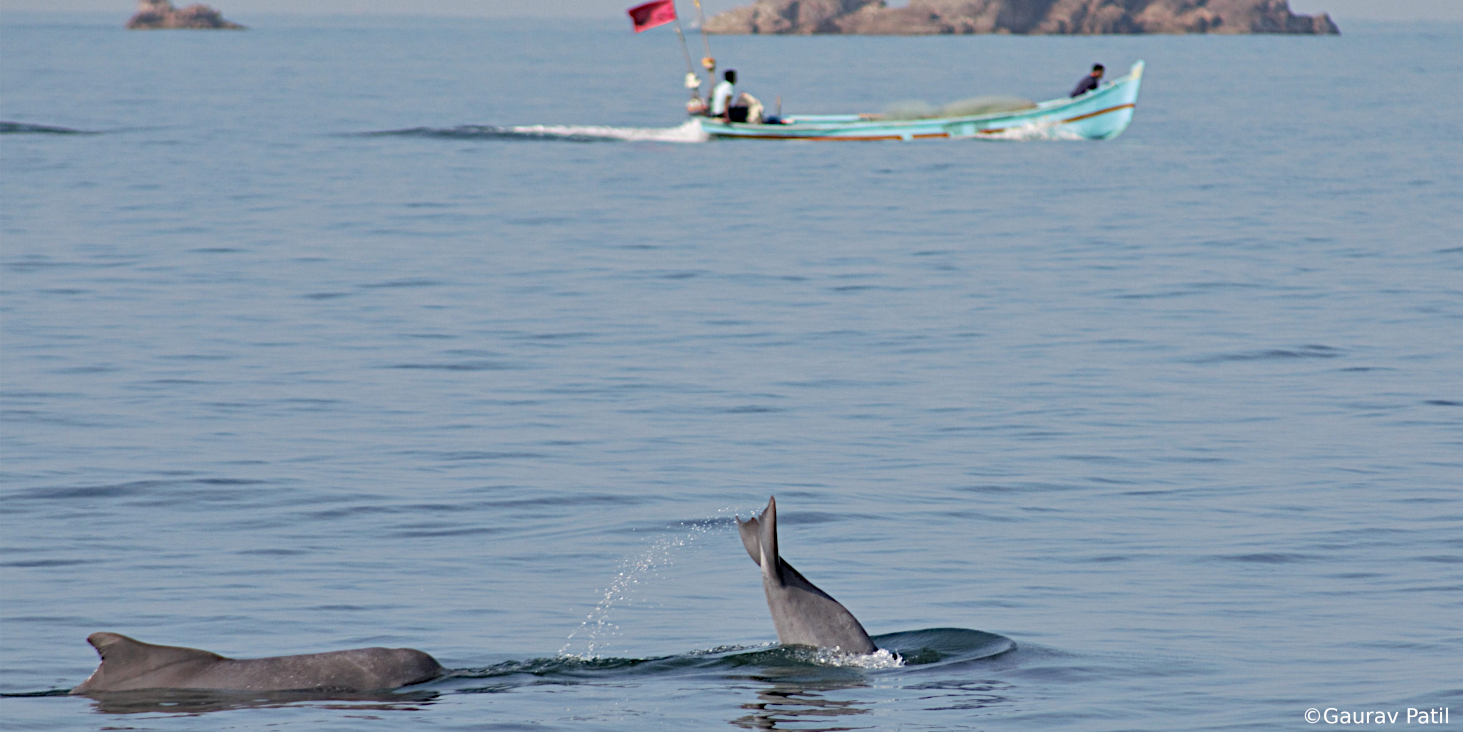
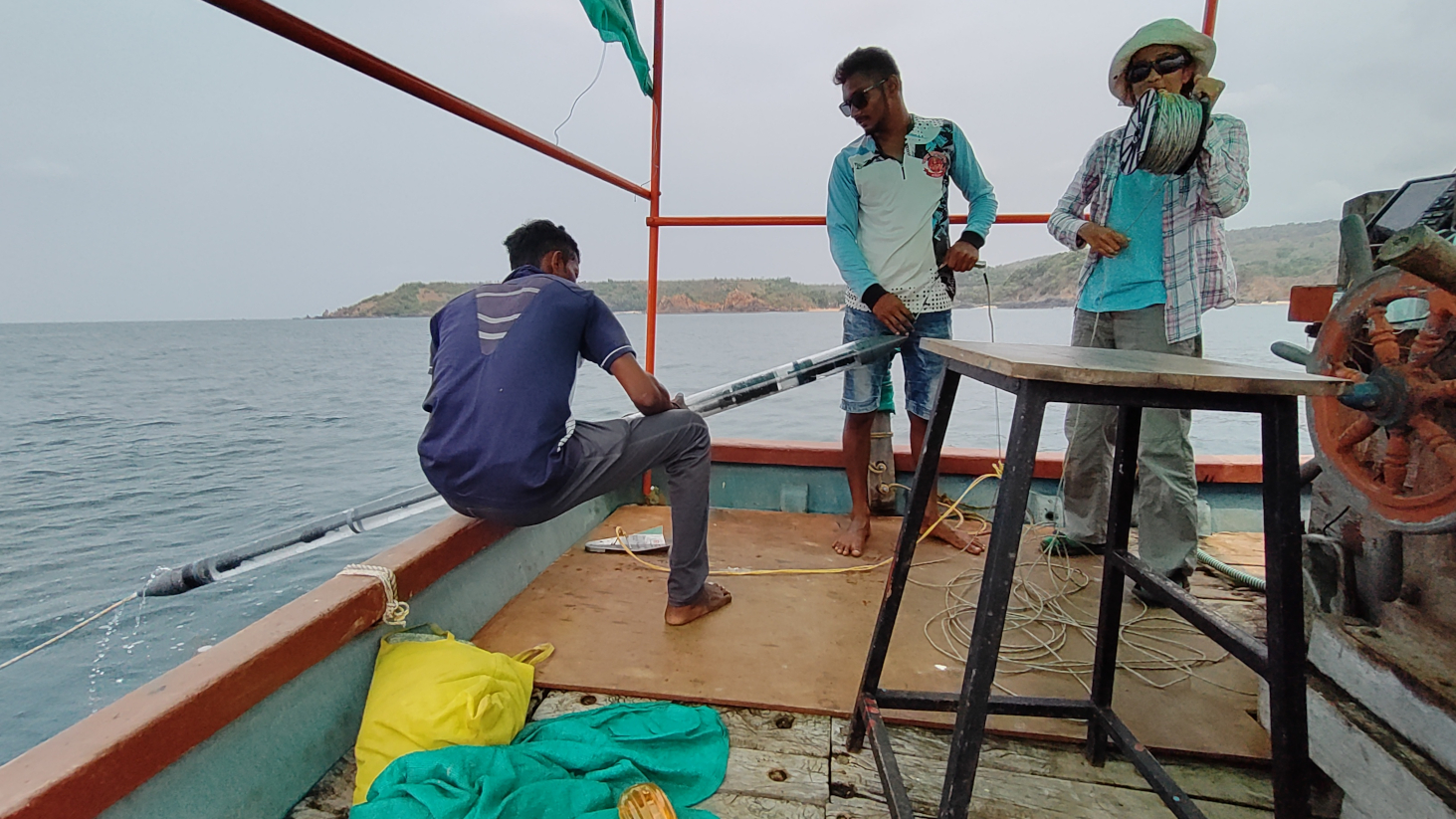
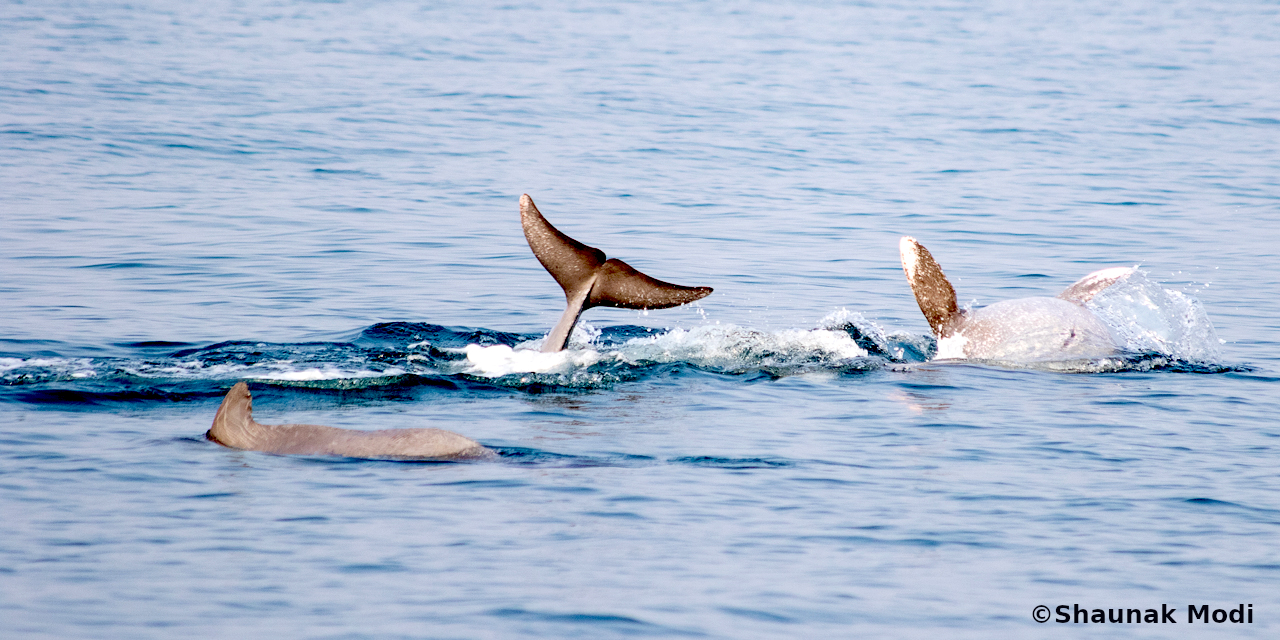
The coastline along Sindhudurg and Goa is part of a region recognized as an Important Marine Mammal Area (IMMA) by the IUCN task force in 2019. While providing livelihood and resources to several local communities, these waters are critical habitats for coastal cetaceans, like the Indian Ocean humpback dolphin and the Indo-Pacific finless porpoise. Both species have a strong preference for shallow, inshore waters which places them at chronic risk of exposure to increasing anthropogenic pressures. Some of the direct threats facing both species are resource depletion, fisheries interactions and incidental mortalities in by-catch. Despite several conservation concerns, both species lack population-level data to develop any management plans.
During an earlier work that provided the first robust population estimates of both species along the Sindhudurg coast, it was noted that that the population size of the finless porpoise in the area was declining significantly. While the exact cause of this decline could not be assessed, increasing anthropogenic pressure cannot be neglected as one of the causes.
The current study proposes to continue population estimation surveys in Sindhudurg and extend these to Goa. Goa has reported an alarming number of mortalities for both species over the last decade. Along with population size estimates, we also propose to conduct a fine-scale assessment of anthropogenic activities in the study area and their overlap with both species.
- Population size estimates for Indian Ocean humpback dolphins and Indo-Pacific finless porpoises
- Spatiotemporal distribution patterns for both species
- Mapping anthropogenic activity in areas of high densities of both species
- Assessing population estimates for both species in relation to mortality events along the coast